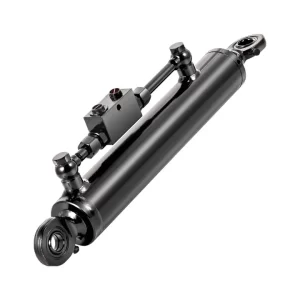
“Reliable hydraulic movement helps agricultural machinery perform demanding tasks with greater control.”
Lifting a heavy agricultural attachment or adjusting farm equipment to the right working angle requires controlled force and reliable movement. Hydraulic cylinders make these operations possible by converting pressurised hydraulic fluid into linear motion, allowing machinery to raise, lower, push, pull, and tilt different components. From tractor-mounted implements to agricultural trailers and harvesting equipment, the cylinder’s design influences how smoothly the machinery performs its intended task. Selecting the right cylinder involves considering load capacity, stroke length, operating pressure, mounting arrangement, and field conditions. Experienced Agriculture Hydraulic Cylinder Manufacturers understand these application requirements and can help businesses identify suitable cylinder designs for different agricultural machines.
Agricultural machinery frequently has to raise heavy attachments, platforms or move equipment to work or transport positions. This is achieved by a pressurised fluid that is used to push and pull a piston rod, known as a hydraulic cylinder. Operating pressure, piston area and cylinder configuration are all factors affecting the force produced. Choosing the right cylinder helps machinery cope with the job it was designed to do while minimizing the stress on the other parts it is attached to.
There are some key points to keep in mind when lifting:
Load capacity: The cylinder should have enough power to handle the weight and use of the equipment.
Working pressure: The cylinder shall be able to operate at the cylinder’s working pressure range.
Cylinder dimensions: Bore size and rod diameter will affect the amount of force and strength that the structure has.
Safety margins: The entire lifting system should be configured in accordance with the anticipated lifting load and safety requirements.
Agricultural equipment tilts to adjust the equipment’s angle for various working positions. This motion could be needed when setting up a trailer body, fine tuning an implement or aligning the attachment for a specific job. The hydraulic cylinders move the equipment between these positions, and the position of the equipment on the cylinder and the geometry of the linkages affect how the equipment travels between these positions.
Tilt control is based on:
Mounting geometry: The movement and mechanical advantage of equipment is affected by the cylinder attachment point.
Movement range: The movement of the cylinder should be compatible with the tilting angle and travel of equipment.
Regulated operation: The controlled operation of the hydraulic valves reduces the movement and sudden changes, at the same time it helps to control it.
Structural compatibility: Linkages, pins, frames which support must be capable of withstanding forces generated by tilting.
Stroke length is the distance between piston rod retracted and extended positions of a hydraulic cylinder. The right stroke selection is necessary as the piece of agricultural equipment could need a small adjustment or a significant stroke. If the stroke is not appropriate, the attachment may not get to its desired location, or the cylinder may hit the end of its travel before the mechanism has finished moving.
Stroke selection involves:
Required travel: Measure the distance travelled by the equipment during normal use.
Retracted length: Measure space when cylinder is completely closed.
Extended length: Ensure that the extended cylinder is capable of achieving the desired motion without obstructing other parts
Mechanical limits: Make sure that the design of the equipment does not allow the cylinder to be pushed beyond its travel.
Agricultural equipment frequently operates with varying loads, which involve soil, crop materials and attachments. Hydraulic cylinders are thus required to withstand the specific forces involved in lifting, lowering and positioning. Cylinder application is important for consistent operation as it involves load distribution, linkage arrangement and operation pressure.
The performance of heavy loads is affected by:
Load distribution: The equipment should distribute the forces correctly on the frame and lifting system.
Rod strength: Piston rod should be strong enough for the forces and conditions to which it will be subjected that may result in bending.
Pressure control: Appropriate system controls help keep operation within specified pressure limits.
Coordinated component performance: Pins, mounts, hoses and other parts that are connected together should be compatible with the cylinder load.
Mounting points provide a specific way in which a hydraulic cylinder is attached to equipment and moves it. The angle of travel, the stress and the available lifting force may be affected if it is positioned incorrectly. The amount of side loading and mechanical interference is minimized by careful cylinder mounting design, and the cylinder moves through the designed cylinder range.
When mounting, these things should be taken into account:
Actual attachment position: The cylinder should be attached in locations appropriate to the equipment’s operation and load.
Alignment: Proper alignment is required to reduce any unnecessary side forces on the piston rod.
Joint movement: Desired pivoting motion can be provided by the use of suitable pins, bushings or articulated connections.
Structural support: Mounting brackets and surrounding frames should be designed to resist forces operating on the structure.
Agricultural machinery is frequently used in dusty fields, wet conditions and fields that have mud and plant debris. If the equipment is not properly protected and maintained, these conditions can cause the cylinder rods, seals, other hydraulic components to become contaminated and damaged. Properly sealing and periodic testing ensures that the hydraulic system is not compromised by contaminating material and is less likely to cause accelerated wear.
Environmental protection can include the following:
Rod surface condition: Keep exposed piston rods clean and inspect them for scratches, corrosion, or damage.
Seal protection: Appropriate seals reduce the amount of contaminants being introduced and inhibit hydraulic fluid from leaking out.
Surface treatment: They can be protected by applying suitable surface treatment to the cylinder components so they are able to resist the intended operating environment.
Regular Check: Examine for buildup of dirt, fluid leaks, hose damage and corrosion.
Any hydraulic cylinder should move at a controlled rate that’s appropriate for the equipment’s function. If the movement is jerky, slow response or it is operating inconsistently, the issue may be with the hydraulic supply, air in the system, contamination, internal leakage or mechanical resistance. These problems can be spotted and help keep equipment moving reliably and avoid further damage to the equipment.
The smooth cylinder operation relies on:
Hydraulic fluid condition: Use the specified fluid and follow recommended service intervals to maintain suitable system performance.
Flow regulation: Proper valves and flow controls maintain the movement of cylinders at the proper speed.
Leak check: Check for hydraulic fluid leaks around fittings, hoses, seals and connections.
The numbers and types of agricultural implements used vary according to their functions, and therefore their hydraulic needs may be quite different. A trailer tipping mechanism might need a different cylinder configuration to be used with a tractor-mounted lifting device or a machine capable of varying the working position. When selecting a cylinder for a particular application, this will ensure that the operating limits, mounting type, stroke and force are compatible with the equipment.
Equipment type: Determine if the cylinder will be used to drive a trailer, a lifting attachment, an adjustable implement, or some other type of farm equipment.
Movement requirement: Determine whether the application needs lifting, lowering, pushing, pulling, or controlled tilting.
Operating environment: Take into account dust, moisture, vibration, etc. in the environment.
Also read this: What Makes a Reliable Telescopic Hydraulic Cylinder Manufacturer?
Every lifting and tilting operation depends on how well the hydraulic cylinder works with the machinery around it. The right combination of force, stroke length, mounting arrangement, and pressure control can help agricultural equipment move through its intended range while handling demanding field conditions. Regular inspection and proper maintenance are equally important for keeping the system dependable during seasonal workloads. When evaluating options from experienced Agriculture Hydraulic Cylinder Manufacturers, businesses should focus on application-specific requirements rather than choosing a cylinder based on size alone. A well-matched hydraulic solution can support controlled equipment movement, practical operation, and consistent performance across a wide range of agricultural tasks.
A hydraulic cylinder converts pressurised hydraulic fluid into linear movement, allowing agricultural equipment to lift, lower, push, pull, and tilt attachments during different farming operations.
Consider the required load capacity, operating pressure, cylinder bore, rod diameter, stroke length, mounting arrangement, and environmental conditions before selecting a suitable model.
Stroke length determines how far the piston rod can extend and retract. Choosing the correct length helps the equipment achieve its intended movement without exceeding its mechanical limits.
Inspect the piston rod, seals, hoses, fittings, and mounting points regularly. Keep exposed components clean, check for hydraulic fluid leaks, and follow the manufacturer’s recommended maintenance procedures.
Manufacturers can provide cylinder designs based on equipment requirements, including load capacity, stroke length, pressure ratings, mounting styles, and operating conditions. The appropriate specifications depend on the machinery and its intended use.
Presstech Systems India Pvt Ltd, as trusted Hydraulic Cylinder Manufacturers, we specialize in designing and manufacturing high-performance hydraulic cylinders for a wide range of industrial applications. We offer Single Acting Hydraulic Cylinder, Telescopic Hydraulic Cylinder, Hydraulic Scissor Lift Cylinder, Hydraulic Lift Cylinder, Construction Hydraulic Cylinder, Hydraulic Passenger Lift Cylinder, Garbage Compactor Cylinder, Water Dam Gate Hydraulic Cylinder, Adjustable Stroke Hydraulic Cylinder, Agriculture Hydraulic Cylinder, Double Acting Hydraulic Cylinder, Welded Hydraulic Cylinder, Cushioned Hydraulic Cylinder, Telescoping Hydraulic Cylinder, Tower Crane Hydraulic Cylinder, and Hydraulic Press Cylinders.
Copyright © 2026 Presstech Systems & Services All Rights Reserved. Design & Developed By