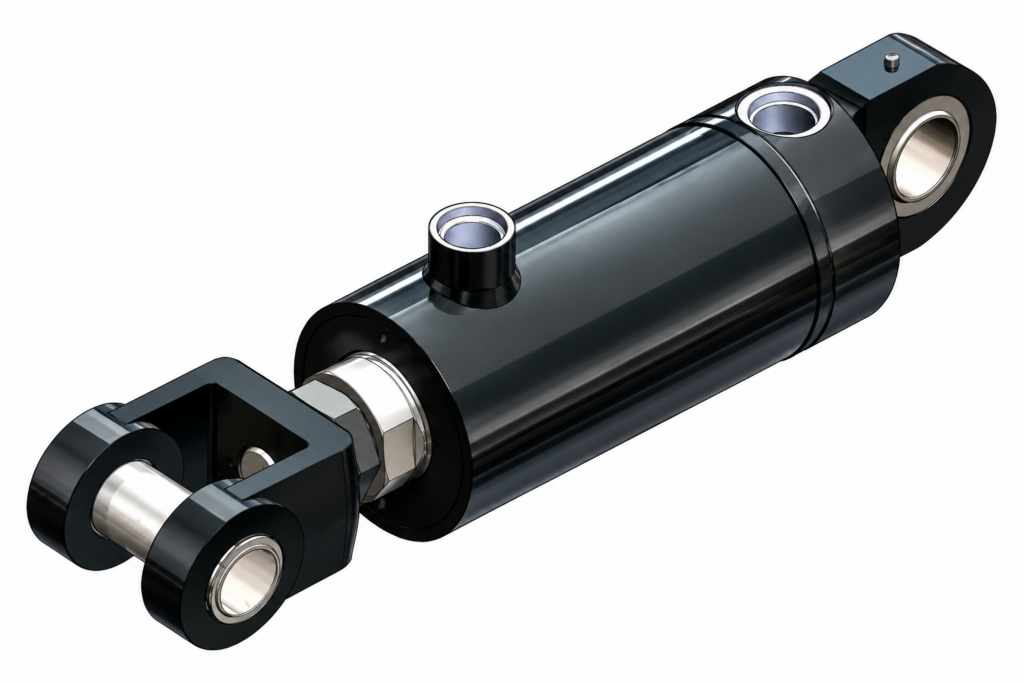
“Reliable hydraulic performance begins with precise engineering and quality construction.”
A hydraulic cylinder that looks suitable on paper may not perform as expected when it faces real operating conditions. Differences in pressure, load, mounting space, movement requirements, and environmental exposure can influence how effectively a cylinder works within a machine. Welded hydraulic cylinders are commonly considered for applications where a compact construction and a securely welded barrel-end arrangement are appropriate. Before making a purchase, it is important to evaluate the cylinder’s specifications against the equipment’s actual requirements. Experienced Welded Hydraulic Cylinder Manufacturers can help buyers understand these technical considerations and identify a suitable configuration for reliable hydraulic operation.
Operating pressure is the pressure of the hydraulic fluid used to create the force needed to move a machine. Ignoring the normal and peak pressure in the system when choosing a cylinder may cause poor performance and reliability. The cylinder should be rated for the pressure range of the hydraulic system and be suitable for a particular application, taking into account the operating cycles and pressure fluctuations.
In order to move the equipment that follows it under anticipated working conditions, the welded hydraulic cylinder should have a sufficient force capacity. The amount of force produced is mainly dependent on the hydraulic pressure and effective piston area, and actual load requirements are dependent on the design and operating forces of the machine. Selecting a cylinder by the outside dimensions alone can lead to an undersized and/or oversized cylinder application.
The size of a hydraulic cylinder (bore and stroke) has an impact on its performance in a machine. The bore is what determines the piston area and how much output the piston will produce and the stroke is what will determine how far the piston rod can go. Wrong dimensions can make the equipment unable to perform the desired motion or affect the operation of other parts. These should therefore be chosen based on the true requirements of the machine.
The piston rod has to transmit the force from the hydraulic cylinder to the connected machinery and therefore must be subject to the operating environment surrounding the hydraulic cylinder. It may be affected by resistance to bending, wear and corrosion based on its diameter, properties, surface finish and length exposed. When the cylinder is subjected to repeated loading or is in a moist, dusty or abrasive environment, it is crucial to select the appropriate rod configuration.
Seals ensure that the hydraulic fluid stays in place and provide the necessary pressure for cylinder operation. They are influenced by the type of seal used, pressure, temperature, the fluid in contact, and the number of times they are used. When seals are mismatched or damaged, they can leak, decrease force output, and lead to premature maintenance. The sealing arrangement should be checked prior to the selection, in order to make sure it is suitable for the application.
The mounting arrangement is the way in which the cylinder is connected to the machine and the way in which the forces are applied when the machine is operated. Depending on the design of the equipment, welded hydraulic cylinders may be offered with various mounting designs. Failure to properly choose the mounting style or not taking advantage of available space may result in problems with installation, alignment, and cause extra mechanical stress.
Materials for a welded hydraulic cylinder should be appropriate for the environment in which it will be used and the load that it is expected to carry. Some moisture-resistant, dustproof, vibration- and temperature-resistant, or corrosion-proof materials or finishes might be necessary for machinery that is subject to moisture, dust, vibration, temperature or corrosive substances. Selecting materials also has an impact on their strength, resistance to wear and the maintenance they require. These factors should be taken into account prior to the purchase of a cylinder to ensure the cylinder is appropriate for its intended use.
The performance of a hydraulic system often depends on how well each component matches the machine’s actual operating demands. Pressure ratings, load capacity, stroke length, rod strength, sealing arrangements, mounting design, and manufacturing quality all influence how effectively a welded cylinder performs over time. Evaluating these factors before purchasing can help businesses avoid compatibility issues and reduce unnecessary maintenance. Experienced Welded Hydraulic Cylinder Manufacturers can help identify suitable cylinder configurations based on operating conditions, equipment specifications, and application requirements. By prioritising accurate engineering, reliable construction, and appropriate technical support, businesses can select hydraulic cylinders that contribute to dependable machinery performance and long-term operational efficiency.
A welded hydraulic cylinder is a hydraulic actuator with a barrel and end components joined through welding. It converts hydraulic pressure into linear force and is commonly used in industrial machinery, mobile equipment, and heavy-duty applications.
Welded hydraulic cylinders can offer compact construction, flexible mounting options, and suitability for demanding applications. Their performance depends on proper engineering, material selection, manufacturing quality, and maintenance.
Consider the operating pressure, required force, bore diameter, stroke length, mounting arrangement, environmental conditions, and available installation space. These specifications should match the machine’s operating requirements.
Use compatible seals and hydraulic fluid, maintain suitable operating pressure, keep the piston rod clean, and inspect seals and fittings regularly. Timely maintenance can help identify leakage before it causes further problems.
Evaluate the manufacturer’s technical expertise, material quality, welding procedures, dimensional accuracy, testing practices, customisation capabilities, and after-sales support. Ensure the cylinder meets your application’s specifications.
Presstech Systems India Pvt Ltd, as trusted Hydraulic Cylinder Manufacturers, we specialize in designing and manufacturing high-performance hydraulic cylinders for a wide range of industrial applications. We offer Single Acting Hydraulic Cylinder, Telescopic Hydraulic Cylinder, Hydraulic Scissor Lift Cylinder, Hydraulic Lift Cylinder, Construction Hydraulic Cylinder, Hydraulic Passenger Lift Cylinder, Garbage Compactor Cylinder, Water Dam Gate Hydraulic Cylinder, Adjustable Stroke Hydraulic Cylinder, Agriculture Hydraulic Cylinder, Double Acting Hydraulic Cylinder, Welded Hydraulic Cylinder, Cushioned Hydraulic Cylinder, Telescoping Hydraulic Cylinder, Tower Crane Hydraulic Cylinder, and Hydraulic Press Cylinders.
Copyright © 2026 Presstech Systems & Services All Rights Reserved. Design & Developed By