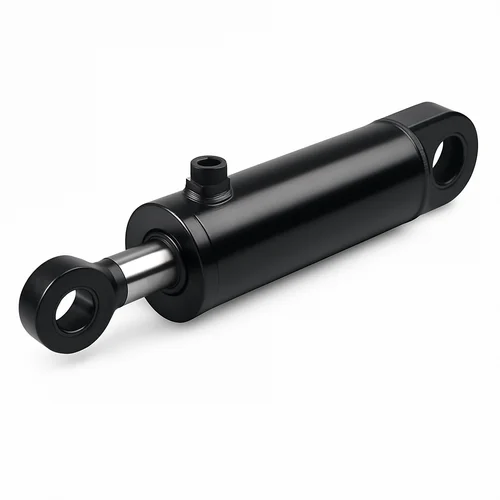
Hydraulic cylinders play an important role in industrial machinery by converting hydraulic energy into mechanical force. From agricultural equipment and construction machinery to materials handling systems and manufacturing units, these components support lifting, pushing, clamping and other essential operations. Choosing the right manufacturer is therefore important for maintaining equipment performance, operational safety, and long-term reliability.
When searching for single-acting hydraulic cylinder manufacturers in Chennai, businesses should look beyond product prices and consider factors such as manufacturing quality, material selection, design capabilities, application requirements, and technical support. A well-designed cylinder can deliver consistent performance while reducing unexpected downtime and maintenance expenses.
“The right hydraulic cylinder delivers the perfect balance of strength, precision, and durability.”
It is important to understand how the hydraulic cylinder is going to be utilised prior to choosing a hydraulic cylinder manufacturer. The various industrial uses require different pressure ratings, stroke, mounting or load capacity. The cylinder that fits the light-duty application may not work well for the heavy-duty machinery. Single-acting hydraulic cylinders are commonly used in hydraulic jacks, lifting platforms, agricultural machinery, compacting equipment, and industrial presses.
There are certain forces, movements and operating conditions needed in each individual application. It’s important for manufacturers to know what type of equipment you need before offering you a cylinder design. Providing precise technological details will prevent product compatibility problems and simplify product selection.
Some of the important factors to be discussed are:
Load capacity: Calculate the amount of force that is needed for lifting, pushing or porting the intended load.
Operating pressure: Determine the working pressure and max operating pressure of the hydraulic system.
Length of stroke: Indicate the stroke in which the piston must work during operation.
Mounting Configuration: Check if the cylinder needs to be mounted on a flange, clevis, trunnion or any other method.
Work conditions: Take into account dust, dampness, chemicals, temperature variations, and outside conditions.
The materials used and the precision achieved in the making of the hydraulic cylinder determine the quality of the cylinder. It is essential that components endure the constant impact, force and repeated use without wearing or bending out of shape. When producing reliable single-acting hydraulic cylinders, manufacturers are aware of the materials used, the accuracy of machining, and surface finishing and assembly quality. They affect the durability and sealing characteristics of the cylinder, and its resistance to leakage.
There are some criteria to check when comparing manufacturers:
Cylinder barrel: A properly selected and finished barrel helps maintain pressure containment and smooth piston movement.
Piston rod: Use of the appropriate steel grade and surface treatments increases the wear resistance and durability of the piston rod.
Seals and wipers: Quality sealing components help prevent hydraulic fluid leakage and reduce contamination.
Machining precision: Precise dimensions and tolerances ensure correct alignment of components and proper functioning.
Corrosion protection: Appropriate coatings or surface treatments help protect components in demanding environments.
Standard hydraulic cylinders can meet many common industrial requirements. But some machines require them to be modified for their specific size, installation or performance. However, in these conditions, it can be easier to work with the manufacturer with design flexibility in order to integrate the equipment. The best manufacturing partner can evaluate your needs and outline which one is better; a standard model or a custom-made solution.
They can be customised with:
Bore and rod size: These are specified by the force required, Pressure in the system and the amount of space available for installation.
Stroke length: Designed to match the movement required by the machine.
Mounting options: Used to fit the machinery or operation’s characteristics.
Pneumatic seal: Designed to run specifically with hydraulic fluid, temperature, and environmental factors.
Surface treatments: They are specified based on corrosion resistance requirements and wear requirements.
Well-known manufacturers can even play a role in pinpointing other design constraints prior to the production process. Furnishing a copy of the drawings, outlining the equipment components, operating pressure and pictures of the current assembly would help this process. The goal of this is to get a cylinder that fits correctly into the hydraulic system and stays trouble-free under the expected working circumstances.
There is much more to the production of hydraulic cylinders than metalworking. It involves knowledge of the principles of hydraulics, mechanical loads, sealing systems, material characteristics and operating conditions specific to the application. A manufacturer with industry experience can assist customers in choosing a component that can avoid numerous choosing pitfalls. But a complete history of the company is not enough to determine experience.
Find out signs of the manufacturer’s technical skills:
Knowledge of application: understanding of your machinery and applying the appropriate cylinder specifications.
Engineering support: Assistance with dimensions, mounting arrangements, and performance requirements.
Production capabilities: Appropriate machining, assembly, and inspection facilities.
Product consistency: A Developed process for the consistency of each product batch.
Technical knowledge: You have knowledge of comparable applications that you provide at the equipment.
Also Read This: How Hydraulic Cylinders Support Equipment Lifting and Tilting
When it comes to hydraulic components, especially in the context of businesses that have multiple machines or significant orders for equipment, price can be important. However, choosing the lowest quotation without examining product specifications can lead to additional expenses later. One of the key considerations for equipment manufacturers and industrial equipment buyers with continuous purchasing needs is production capacity.
Excessive delays in receiving hydraulic cylinders can cause assembly delays and impact project delivery dates. There is also a good reason to talk through what the manufacturer does in the event of an emergency order, when they need to replace an order, etc. and when it is necessary to increase or decrease the amount of an order. And when things can be predicted, it’s easier with a supplier who is both realistic with their production schedule and communicates well. You should compare all the value that each manufacturer provides, in order to make a fair comparison.
Before making a purchasing decision, compare these factors:
Product specifications: Check whether the quoted cylinders meet the same bore, stroke, pressure, material, and mounting requirements.
Manufacturing lead time: Confirm the expected production and delivery schedule.
Order flexibility: Check if the manufacturer is capable of producing small runs and prototypes and can help with larger production orders.
Understand warranty terms: Coverage, exclusions, and how to deal with manufacturing defects.
Look at maintenance needs, estimated service life and replacement frequency for long-term operating costs.
All hydraulic cylinders work at high pressure, and therefore product inspection and testing are imperative. Leakage or inconsistent movement of the cylinder or failure of the components can occur if the cylinder fails to meet its specified requirements. Ensure that you inquire from the manufacturer what they do check before and after manufacturing the product. The tests should correspond to the design and intended conditions of operation of the cylinder.
Key checks to be done include:
Dimensional inspection: Verifies critical dimensions against the drawing or specifications.
Pressure testing: Assists in determining pressure integrity under specified pressure test conditions.
Leakage inspection: Checks for hydraulic fluid leakage around seals, ports, and connections.
Functional testing: Evaluates piston movement and basic operating performance.
Material and process traceability: Where required, helps establish the origin and conformity of materials and manufacturing processes.
Buyers should also ask whether inspection records or test reports are available for their orders. Documented quality procedures may be used to assist in evaluating and accepting products, especially a product for applications where procurement is very critical.
The manufacturer should not be exempt from their responsibilities upon delivery. Hydraulic cylinder seals, fittings, troubleshooting and repairs are required over time due to natural wear and operating conditions. When technical support is readily available, businesses can identify issues early on and ensure that equipment is functioning. This is particularly important for machinery that is used constantly or in critical production processes.
When assessing after-sales service, ask yourself if the manufacturer offers:
Installation guidance: Support for correct mounting, alignment, and hydraulic connections.
Maintenance recommendations: Instructions for routine inspection and suitable servicing intervals.
Spare parts availability: Availability of compatible replacement parts and/or seals.
Troubleshooting assistance: Guidance for investigating leakage, uneven movement, or reduced performance.
Repair support: Information about inspection, refurbishment, and replacement options.
The benefits of regular maintenance can also be an important factor in prolonging the service life of cylinders. Maintaining clean hydraulic fluid, and checking out seals, piston rod, and conditions for operation are ways to prevent unnecessary failure.
“A durable hydraulic cylinder is an investment in long-term operational efficiency.”
There are several factors that must be taken into account when selecting a hydraulic cylinder supplier, including application requirements, hydraulic cylinder manufacturing quality, customisation ability, hydraulic cylinder technical expertise, hydraulic cylinder pricing, hydraulic cylinder testing and after-sales service. All these are important to the safety and reliability of the hydraulic system in which the cylinder is running. However, single-acting hydraulic cylinder manufacturers in Chennai need to be judged according to the technical feasibility and credibility of the products as well as price, not just by price. By checking out the specifications, enquiring about the inspection process and confirming maintenance support, you can prevent unwarranted downtime and replacement costs.
Presstech Systems India Pvt Ltd, as trusted Hydraulic Cylinder Manufacturers, we specialize in designing and manufacturing high-performance hydraulic cylinders for a wide range of industrial applications. We offer Single Acting Hydraulic Cylinder, Telescopic Hydraulic Cylinder, Hydraulic Scissor Lift Cylinder, Hydraulic Lift Cylinder, Construction Hydraulic Cylinder, Hydraulic Passenger Lift Cylinder, Garbage Compactor Cylinder, Water Dam Gate Hydraulic Cylinder, Adjustable Stroke Hydraulic Cylinder, Agriculture Hydraulic Cylinder, Double Acting Hydraulic Cylinder, Welded Hydraulic Cylinder, Cushioned Hydraulic Cylinder, Telescoping Hydraulic Cylinder, Tower Crane Hydraulic Cylinder, and Hydraulic Press Cylinders.
Copyright © 2026 Presstech Systems & Services All Rights Reserved. Design & Developed By