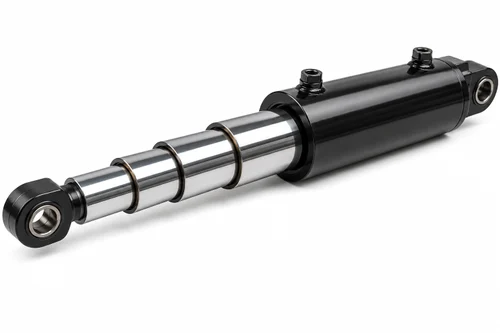
Telescopic hydraulic cylinders play an important role in equipment that requires extended reach, high lifting capacity, and controlled movement within a limited installation space. They are commonly used in dump trucks, construction machinery, agricultural equipment, material handling systems, and other industrial applications. Since these cylinders often operate under heavy loads and demanding conditions, choosing the right manufacturer is essential for achieving consistent performance and long-term reliability. Reliable telescopic hydraulic cylinder manufacturers focus on engineering accuracy, material quality, manufacturing standards, and application-specific requirements rather than simply supplying a finished product.
Let’s dive into this blog to explore what makes a reliable telescopic hydraulic cylinder manufacturer and how to choose the right one for your industrial requirements.
“Every stage of a telescopic cylinder reflects the importance of precision and quality.”
A reliable manufacturer understands that telescopic hydraulic cylinders must be designed according to the operating conditions of the equipment in which they will be installed. Compared to standard hydraulic cylinders, telescopic models use multiple nested stages that extend sequentially to achieve a longer stroke within a compact retracted length. Manufacturers with strong technical knowledge consider several factors before finalising a cylinder design, including the required lifting force, operating pressure, stroke length, mounting arrangement, and available installation space.
They also evaluate the relationship between the cylinder’s dimensions and the load it needs to handle. Engineering expertise becomes particularly important when equipment operates in challenging environments. A cylinder used in a tipping trailer may have different requirements from one installed in industrial lifting equipment. Selecting a design based on the actual application helps prevent performance limitations and unnecessary mechanical stress.
The strength, durability and service life of a telescopic hydraulic cylinder are directly related to the quality of raw materials used. Since there are a number of moving stages inside the cylinder, all components within the cylinder need to be matched for dimensional and mechanical requirements. The incorrect selection of materials, or poor machining, may create a high rate of wear out, hydraulic leakages and a decrease in process efficiency. Study these important manufacturing considerations when reviewing any manufacturer.
Cylinder tube quality: Properly selected materials help the cylinder withstand internal hydraulic pressure and demanding operating conditions.
Surface finishing: A smooth, accurately finished surface for effective sealing and to minimise friction between moving parts.
Tolerances: Proper tolerances ensure that there is never a misalignment between telescopic stages and that excessive wear is not caused.
Consistency of components: Consistently made pistons, rods, seals and guides help to ensure reliable function.
Multi-stage cylinders require particular care in precision manufacturing owing to the connection of various parts with important functions in the extension and retraction movements. Small variations in dimensions can have an impact on the function and sealing ability. A reliable manufacturer uses production processes and inspects components at suitable points in the product cycle. This assists completion of the finished cylinder compared to visual inspection to achieve the required design specifications.
Professional manufacturers create inspection methodologies that they have in place to expose defects before they reach the customer. These procedures can comprise material verification, dimensional inspection, pressure testing, leak testing and functional testing, depending on the cylinder design and application.
For a good quality assurance process, the following areas should be covered:
Component inspection: Individual parts are checked for dimensional accuracy, surface defects, and conformity with the design specifications.
Assembly verification: Seals, pistons, stages, and other components are assembled correctly to support smooth operation.
Hydraulic Testing: Tests are performed that are suitable to determine if there are any leaks or faults when it comes to the pressure performance specified in the requirements.
Functional evaluation: Extension and retraction are assessed to discover abnormal motion or any other functional difficulty.
Rejected products: The cylinder is rejected and sent back for further tests if it fails to meet agreed standards in any aspect.
Each application will have different testing procedures. These inspections and tests are dependent upon the operating pressure, load, design and customer requirements. Therefore, businesses should enquire from manufacturers what tests they run and if test records are available.
While the standard cylinder designs might meet basic equipment needs, some have specialised dimensions, mounting setups, or operating qualities, making them suitable only for certain applications. A good manufacturer will have the ability to recognise these needs and assess if there’s a design they already have or if they’ll be able to build you a specialised solution.
Customisation may involve:
Stroke length and number of stages: Depending on the desired extension and installation space available.
Bore and stage dimensions: Designed to deliver the necessary force under specified operating conditions.
Mounting arrangements: Adapted to suit the machine’s structural configuration and movement.
Transmitted pressure: Designed to withstand the hydraulic system’s limitations.
Sealing and surface protection: Depending on the workplace and exposure to harmful substances.
It is also important that manufacturers are aware of the engineering feasibility of a designed solution. For example, longer strokes can change the stability and overall dimensions, which may have a bearing on many engineering factors. During all of this, it is essential that there is adequate communication between the customer and the manufacturer. Transmitting such information as equipment drawings, load requirements, operating conditions and installation information will assist the engineering team to determine the appropriate solution.
Also Read This: Top Factors to Consider When Choosing Hydraulic Scissor Lift Cylinder Manufacturers
Industry experience gives the manufacturer a better understanding of the challenges associated with different types of hydraulic equipment. The operation at minimum is more or less similar, but the requirements on the cylinder can be very different in the various applications.
Take the following as a few common examples.
Construction and earthmoving equipment: Hydraulic cylinders will experience heavy lifting and positioning and are exposed to vibrations and dust.
Dump Trucks & tipping trailers: Telescopic cylinders are required to expand in order to lift the tipping body and unload dirt. For controlled lifting and lowering, it is important that the machine operates reliably.
Equipment: Agricultural machinery can be used outdoors where there is potential for exposure to mud and moisture, dust and changing weather conditions, requiring proper sealing and upkeep of equipment.
Material handling systems: These applications may require controlled movement, suitable load capacity, and dimensions that fit the machine’s design.
Industrial lifting equipment: The cylinder must have specifications of load, stroke and pressure, as well as safety specifications for the work it is building.
When discussing the manufacturer, enquire about previous projects that have been done using a similar machine setup. Some of the experience gained can lead to identification of potential design challenges early and aid the selection of the product. But even experience alone is not enough; sound engineering practices, proper testing and consistent manufacturing quality are necessary.
The manufacturer should be liable after the cylinder has left the factory. Improved communication and reliable technical support are of the same level of significance, especially for custom-made and complex equipment-integrated products. When ordering, verify that the manufacturer can supply all necessary technical data for the installation, operation and maintenance. It can contain dimensional drawings, pressure ratings, mounting information, instructions for use and maintenance information depending on the product.
When calling for customer service, there are several situations in which it can matter for the better:
During product selection: Technical teams help clarify specifications and identify suitable cylinder configurations.
Before installation: Drawings and mounting information help confirm compatibility with the equipment.
During operation: Troubleshooting guidance can help identify possible causes of abnormal movement or leakage.
During maintenance: Information about seals, inspection intervals, and replacement components supports routine servicing.
It is also worth discussing lead times, spare-part availability, warranty terms, and the procedure for handling product-related concerns. These details help business organisations know if they would get their cylinder supported at a particular level upon buying it. A supplier who can answer technical questions in a good way and can offer delivery dates that seem appropriate is likely to be more favourable to work with over the long run.
Price is an important consideration when purchasing hydraulic equipment, particularly for businesses managing multiple machines or large industrial projects. However, selecting a cylinder based only on the lowest quotation may result in higher expenses if the product requires frequent repairs or fails to meet operational demands.
A more effective approach is to compare the complete value offered by different manufacturers.
Evaluation factor | What to check |
Product quality | Materials, machining accuracy, and component standards |
Engineering suitability | Compatibility with load, pressure, stroke, and mounting requirements |
Testing procedures | Inspection methods and relevant test documentation |
Delivery commitments | Production lead time and dispatch arrangements |
After-sales support | Warranty, technical assistance, and spare-part availability |
“Choosing the right manufacturer is an investment in long-term equipment performance.”
When it comes to selecting the right manufacturer, you need to ensure that you get a telescopic hydraulic cylinder that can deliver the performance levels required by your equipment and ensure its seamless and reliable operation in challenging environments. The quality of the engineering skill, quality materials, precision manufacturing, effective testing, customisation for applications, and reliable technical support must be considered prior to investing in a purchase. For telescopic hydraulic cylinder manufacturers, the important thing to take into account is finding one that is capable of providing quality products, appropriate designs, and maintenance assistance in the long run. To minimise buying risks, examine technical specifications, ask questions, and check on quality control procedures. In the end, it is beneficial to work with a trusted manufacturer to enjoy improved reliability, reduce productivity loss and promote efficient industrial operations.
Presstech Systems India Pvt Ltd, as trusted Hydraulic Cylinder Manufacturers, we specialize in designing and manufacturing high-performance hydraulic cylinders for a wide range of industrial applications. We offer Single Acting Hydraulic Cylinder, Telescopic Hydraulic Cylinder, Hydraulic Scissor Lift Cylinder, Hydraulic Lift Cylinder, Construction Hydraulic Cylinder, Hydraulic Passenger Lift Cylinder, Garbage Compactor Cylinder, Water Dam Gate Hydraulic Cylinder, Adjustable Stroke Hydraulic Cylinder, Agriculture Hydraulic Cylinder, Double Acting Hydraulic Cylinder, Welded Hydraulic Cylinder, Cushioned Hydraulic Cylinder, Telescoping Hydraulic Cylinder, Tower Crane Hydraulic Cylinder, and Hydraulic Press Cylinders.
Copyright © 2026 Presstech Systems & Services All Rights Reserved. Design & Developed By