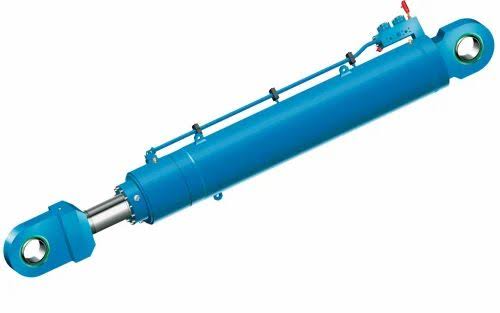
“Reliable hydraulic performance begins with engineering that understands the demands of heavy industry.”
Inside a steel mill, hydraulic cylinders often work behind the scenes to move heavy equipment, position materials, and support demanding industrial operations. These components must handle substantial forces, repeated movement, high operating pressures, and challenging environmental conditions without compromising the performance of the machinery they serve. Their reliability depends not only on size but also on how the barrel, piston rod, seals, mounting points, and other components are designed and assembled. Understanding these construction details can help industrial buyers make better equipment decisions. Experienced mill duty hydraulic cylinder manufacturers focus on application requirements to develop cylinders suited to demanding steel mill environments.
The cylinder barrel is the primary pressure bearing part of a hydraulic cylinder. It needs to be able to resist the hydraulic pressure necessary to create the force to move heavy equipment during the steel mills’ operations. The material, thickness of the barrel, quality of its machining and construction affect the extent to which it will meet the operating limits it is designed to handle. Reliability is crucial throughout the service life of the cylinder, so careful engineering is essential.
Barrel construction depends on:
The piston rod is used to transmit power from the hydraulic cylinder to the machine it is connected to. It can be used repeatedly in steel mills, for moving heavy assemblies, positioning equipment, or controlling mechanical movements. The rod must have the appropriate strength, dimensions and surface protection for the intended use. This should also include taking the risk of bending into account if the cylinder is required to be subject to excessive side loading, or if it is not mounted correctly.
Piston rod design should consider:
Seals control hydraulic fluid flow in cylinder and minimize fluid leakage around moving parts. Seals can be subject to pressure fluctuations, repeated motion, temperature changes, and contamination in critical industrial conditions. Thus, it is essential to choose an appropriate seal configuration in the construction of a cylinder. The seals have to be compatible with the hydraulic fluid, pressure, operating temperature and movement characteristics of the application.
Seal construction involves:
Machinery can be subjected to scale, dust, moisture, vibration and more challenging conditions in steel mills. The material type and protective finishes of the hydraulic cylinder are therefore important, depending on the application and environment where the cylinder is used. A cylinder near a process area may be subjected to different environmental concerns than one inside an enclosed machine assembly. These factors should be taken into account when designing a product to ensure that the material chosen and the protective measures are appropriate.
Material selection should account for:
Also Read This: Key Factors to Consider When Choosing a Single-Acting Hydraulic Cylinder Manufacturer
The performance of hydraulic cylinders is partially affected by the way that the cylinder is attached to the machinery that it is used for. Mounting points are important to pass force from the cylinder to the equipment, and therefore their design should be appropriate for the direction and amount of movement. Evenly worn parts, side loading, or excessive stress on the piston rod and mounting parts can result from poor alignment. The arrangement of the mounting of the cylinder assists the cylinder in achieving its desired stroke movement and provides stable operation.
Mounting design considerations include:
Steel mill equipment can be exposed to hot materials and dust, scale and debris can build up in the environment. If hydraulic cylinder components are not designed and protected properly, these conditions can negatively impact hydraulic cylinder performance. Abrasive particles can cause damage on exposed rods or pollute moving interfaces and heat exposure can affect the seals to be selected. A thorough knowledge of the operational environment is a key to identifying what preventive measures and maintenance needs are necessary.
Temperature suitability
Use seals and materials that are suitable for the temperatures in the cylinder’s environment.
Rod protection
Consider suitable guards or protective arrangements where impact or contamination is likely.
Rod wiper design
Use appropriate rod wipers to remove contaminants while the rod is retracting.
Maintenance access
Allow components to be inspected and cleaned as required by manufacturer’s recommendations.
A hydraulic cylinder consists of parts that need to operate in concert, with carefully controlled clearances and tolerances. All parts can affect the efficiency of the cylinder’s movement and retaining hydraulic pressure: Piston, Barrel, Rod, Seals, Guiding Elements. Variations in manufacturing accuracy may be a factor in friction, leakage, wear, and consistency of operation. Therefore, it is important that the cylinder is assembled and inspected properly to ensure it conforms to its design.
Manufacturing precision involves:
In steel mill operations, dependable hydraulic performance begins with construction choices that match the demands of the machinery. Barrel strength, piston rod protection, sealing arrangements, mounting accuracy, and manufacturing precision all contribute to how a cylinder handles pressure, repeated loads, and challenging working conditions. Looking at these components as one integrated system helps industrial buyers evaluate performance beyond basic dimensions or specifications. Experienced Mill Duty Hydraulic Cylinder Manufacturers understand the importance of matching cylinder design to the actual operating environment, maintenance requirements, and equipment configuration. By prioritising suitable materials, accurate manufacturing, and application-specific engineering, businesses can select hydraulic cylinders that support reliable movement, minimise avoidable downtime, and meet the long-term demands of heavy industrial operations.
A mill duty hydraulic cylinder converts hydraulic pressure into linear force to move, lift, press, or position heavy industrial equipment. It is commonly used in demanding applications such as steel processing machinery, material handling systems, and industrial production equipment.
Mill duty cylinders are designed for demanding industrial applications that may involve high loads, repeated operating cycles, and harsh environmental conditions. Their construction, sealing arrangements, materials, and mounting configurations are selected according to the specific operating requirements.
Important components include the cylinder barrel, piston, piston rod, seals, bearings, and mounting points. Their material quality, dimensional accuracy, and compatibility influence the cylinder’s ability to perform reliably under specified conditions.
Regular inspection, suitable hydraulic fluid, timely seal replacement, correct alignment, and preventive maintenance can help reduce unnecessary wear. Operating the cylinder within its specified pressure and load limits is also important.
Evaluate the manufacturer’s engineering capabilities, material selection, manufacturing precision, quality control procedures, customisation options, and ability to meet your application’s pressure, load, stroke, and environmental requirements.
Presstech Systems India Pvt Ltd, as trusted Hydraulic Cylinder Manufacturers, we specialize in designing and manufacturing high-performance hydraulic cylinders for a wide range of industrial applications. We offer Single Acting Hydraulic Cylinder, Telescopic Hydraulic Cylinder, Hydraulic Scissor Lift Cylinder, Hydraulic Lift Cylinder, Construction Hydraulic Cylinder, Hydraulic Passenger Lift Cylinder, Garbage Compactor Cylinder, Water Dam Gate Hydraulic Cylinder, Adjustable Stroke Hydraulic Cylinder, Agriculture Hydraulic Cylinder, Double Acting Hydraulic Cylinder, Welded Hydraulic Cylinder, Cushioned Hydraulic Cylinder, Telescoping Hydraulic Cylinder, Tower Crane Hydraulic Cylinder, and Hydraulic Press Cylinders.
Copyright © 2026 Presstech Systems & Services All Rights Reserved. Design & Developed By